

Publishers have been promised a lot from ad tech over the years. Most of it required more work, more complexity, and more headcount… for marginal gains.
Prebid Sales Agent is different. It’s open source. It deploys in an afternoon. And it could double sales of your premium ad products without adding a single headcount.
The Economics of Direct Sales Are Broken
Today, direct sales is constrained by human bandwidth. A publisher’s sales team can only manage so many relationships, negotiate so many IOs, and onboard so many new advertisers. The economics are brutal: below a certain deal size, the cost of sales exceeds the margin on the buy. This is why mid-tail advertisers end up in programmatic despite wanting premium placements.
Agentic advertising changes this math entirely.
When an AI agent can discover your inventory, negotiate terms, and execute a buy without human involvement on either side, the friction cost approaches zero. Suddenly a $5,000 sponsorship makes economic sense. So does a $500 one. The long tail of advertisers who want direct relationships with publishers but can’t afford the transaction costs can now participate.
This is the shift from day trading to portfolio management. Programmatic is bid-by-bid, impression-by-impression optimization - exhausting for humans and algorithms alike, leaving value on the table. Agentic buying is strategic: an agent allocates budget across a portfolio of publisher relationships, optimizes over weeks not milliseconds, and finds value that no human (or DSP) would have the bandwidth to discover.
For publishers, this means premium revenue can scale without scaling headcount.
The Power of Prebid
If you’re not an ad tech nerd you may not know about Prebid. It’s an open source project, started by competing ad tech firms in 2017, to create a standard way for ad platforms to integrate with publishers. Every meaningful ad platform has an adapter, from Amazon to Zeta. Prebid was at the heart of the Google ad tech antitrust trial and one of the proposed remedies is for Google to adopt Prebid as the layer between its buy-side and sell-side tools. It’s the glue that makes the open web work for programmatic advertising.
When Prebid launched in 2017, it was adopted within two years by every major publisher.
No sales people.
No fancy marketing.
They just tried it. And they saw their programmatic revenue increase by 20%.
What if we could do the same for premium inventory?
When the Ad Context Protocol launched in October 2025, I started thinking about how to help open web publishers connect to agentic buyers. What if Prebid offered an open source sales agent?
Turns out I wasn’t the only one thinking that. Prebid had already formed an Agentic Working Group, recognizing that agent-to-agent commerce was coming to advertising.
For the past six months many people - and coding agents - have contributed code, ideas, and bug reports to build an open source sales agent. We’ve rewritten, refactored, and rearchitected. It’s been frustrating, annoying, exhausting, and amazing all at the same time. And today, after months of review and discussion with the Prebid Agentic Working Group, this project has been released as the Prebid Sales Agent. Now ready to roll, free and open source, allowing any publishers to benefit from the agentic advertising marketplace opportunity.
So what is Prebid Sales Agent? Let me show you!
Prebid Sales Agent from the outside
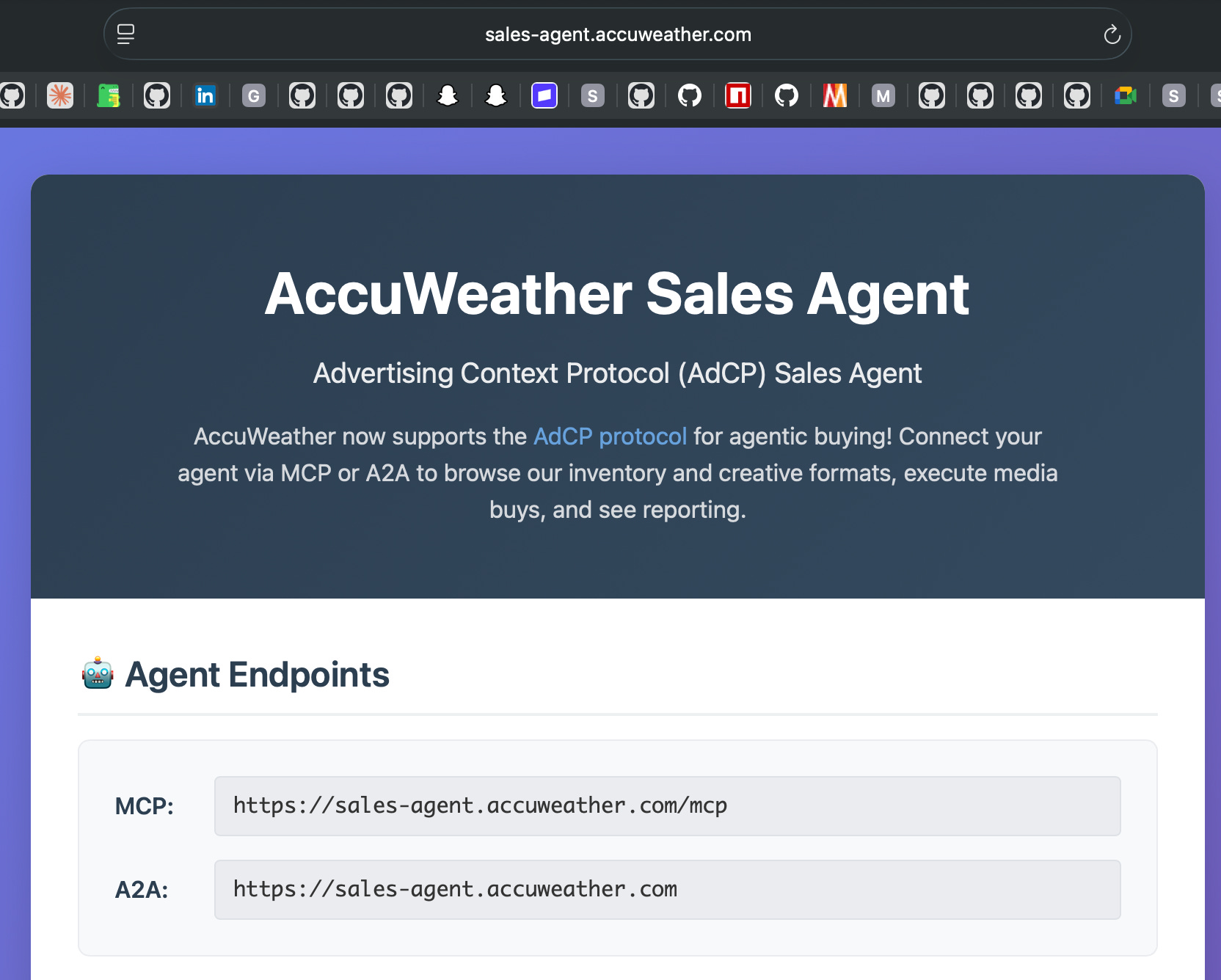
If you’re a buyer and want to work with a publisher running Prebid Sales Agent, what you see is an agent-friendly AdCP interface. This page is SO ugly for humans, but to agents I promise this is gorgeous:
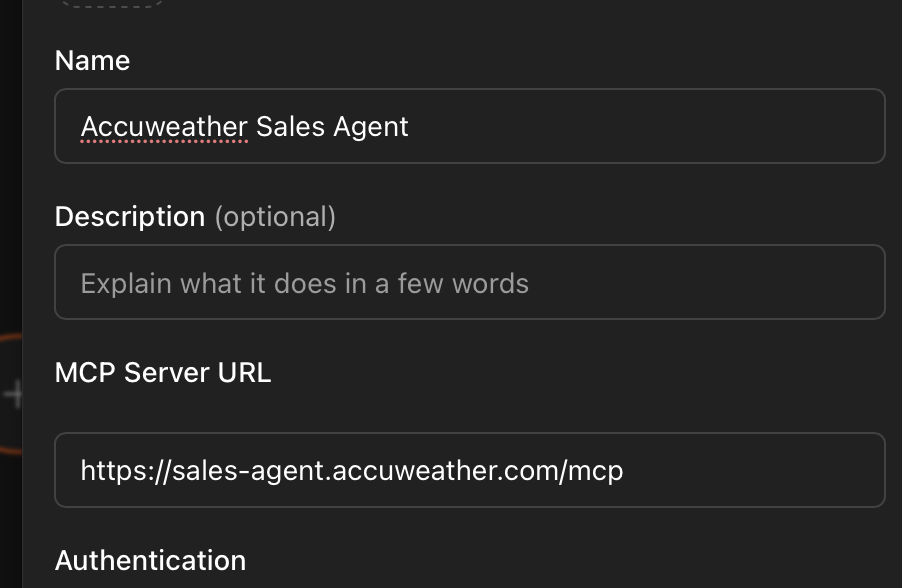
I can connect this to my agent (this is ChatGPT, but this could be an enterprise agent builder like Langchain or whatever):
And then I can ask for ad products that fit my brand and campaign:
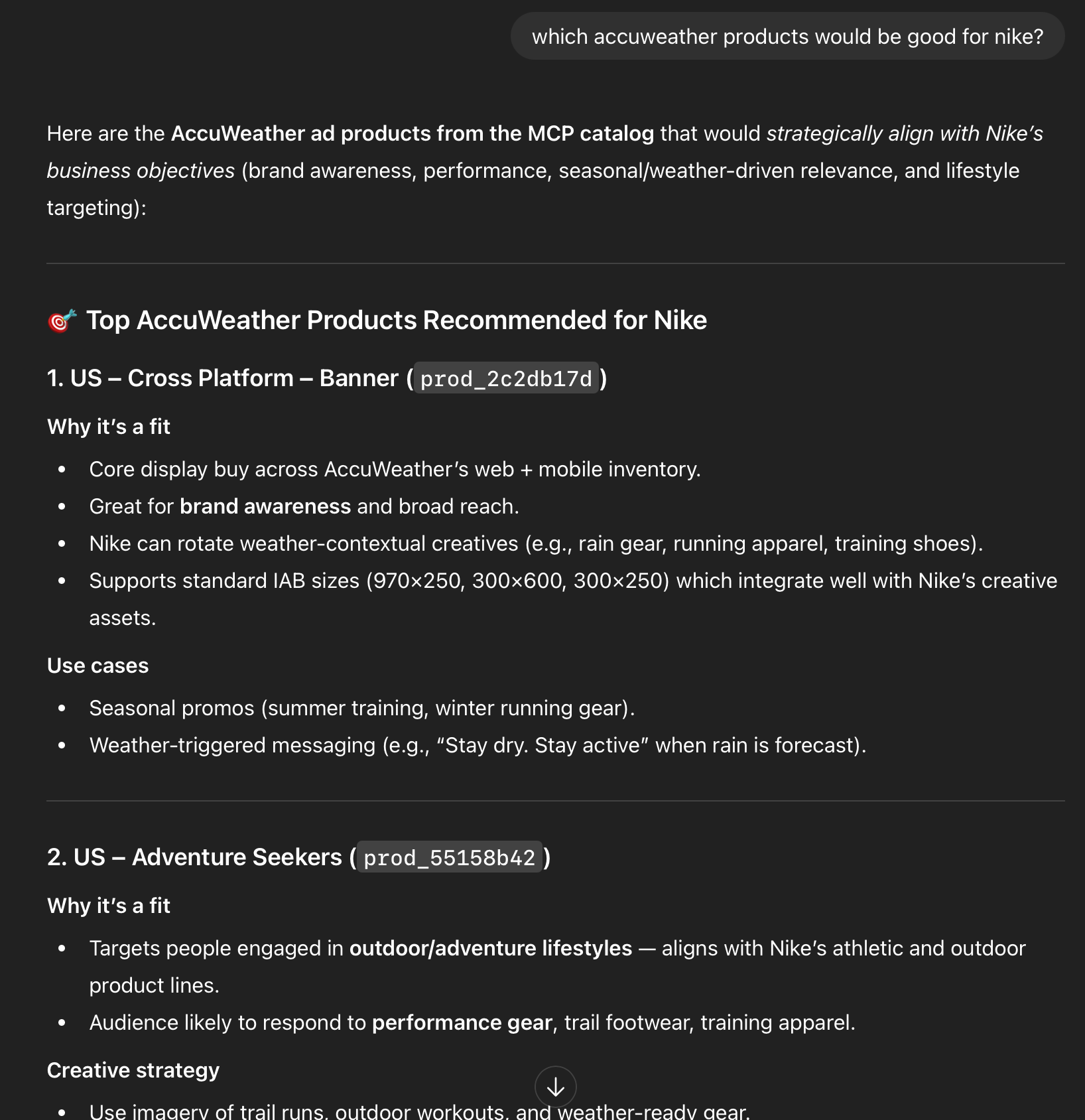
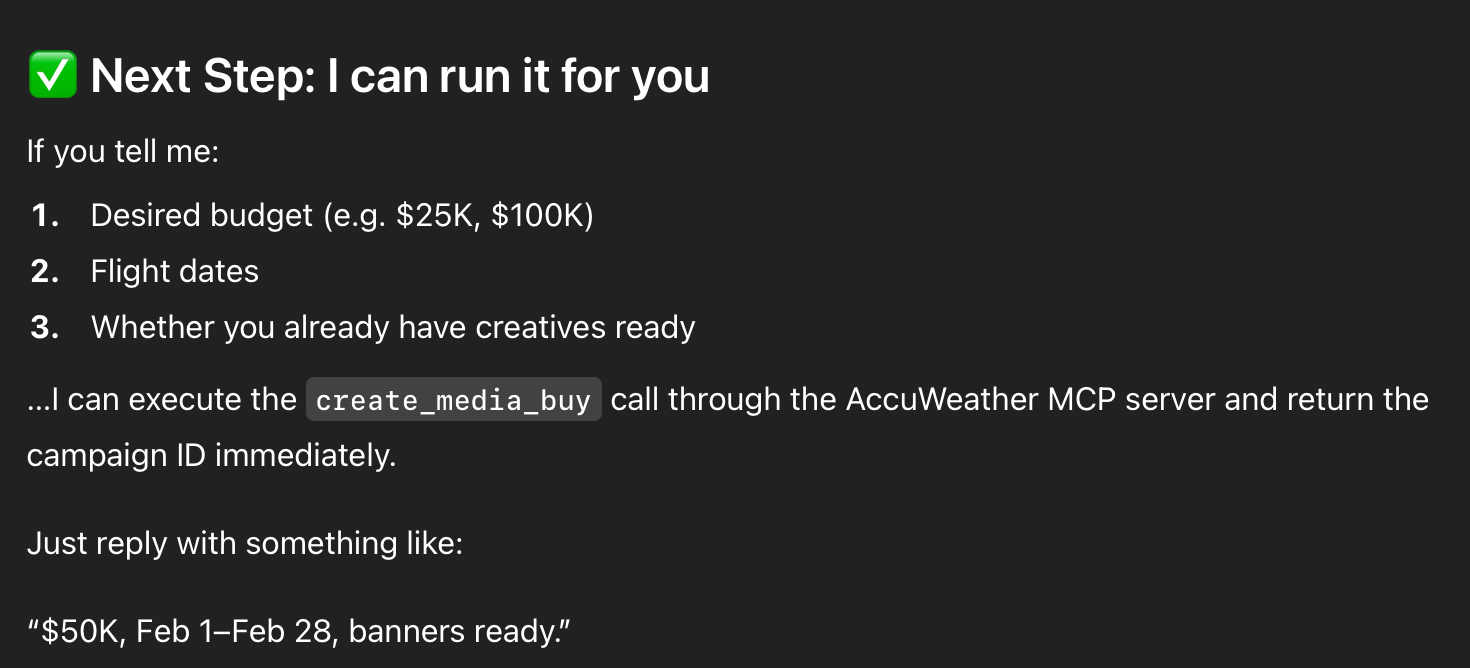
So cool right? Note that you have to actually have an account with Accuweather to place a buy, so call them up. Once the buy starts running, you need reporting. You can ask ChatGPT (it calls the sales agent) or register a webhook for daily delivery data - useful for budget reallocation, analytics, and other automated workflows.
Prebid Sales Agent on the inside
From a technical perspective, Prebid Sales Agent deploys as a Docker container you can run in any cloud hosting environment. You just need a Postgres database to point it to.
Or, as with Prebid.js, there are a bunch of companies and people that can help you set up a sales agent. One example is Bidcliq, offering an integrated programmatic+agentic wrapper built on the Prebid stack. You can see a list of companies supporting and providing sales agents (both built on Prebid Sales Agent and not) at AgenticAdvertising.org.
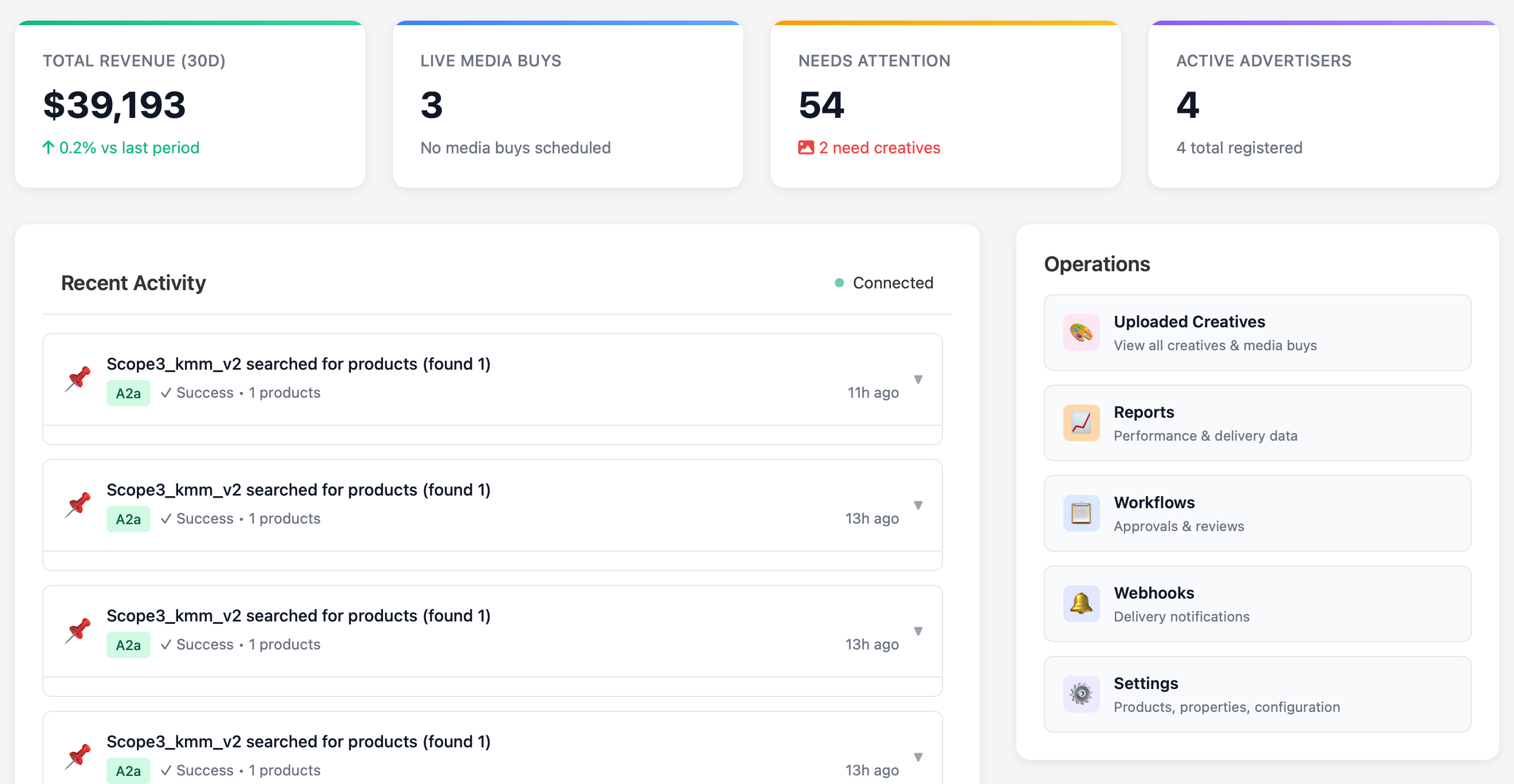
Once you log in, you’ll see a dashboard like this, with the active buys, live activity feed of both A2A and MCP requests, and anything that needs attention.
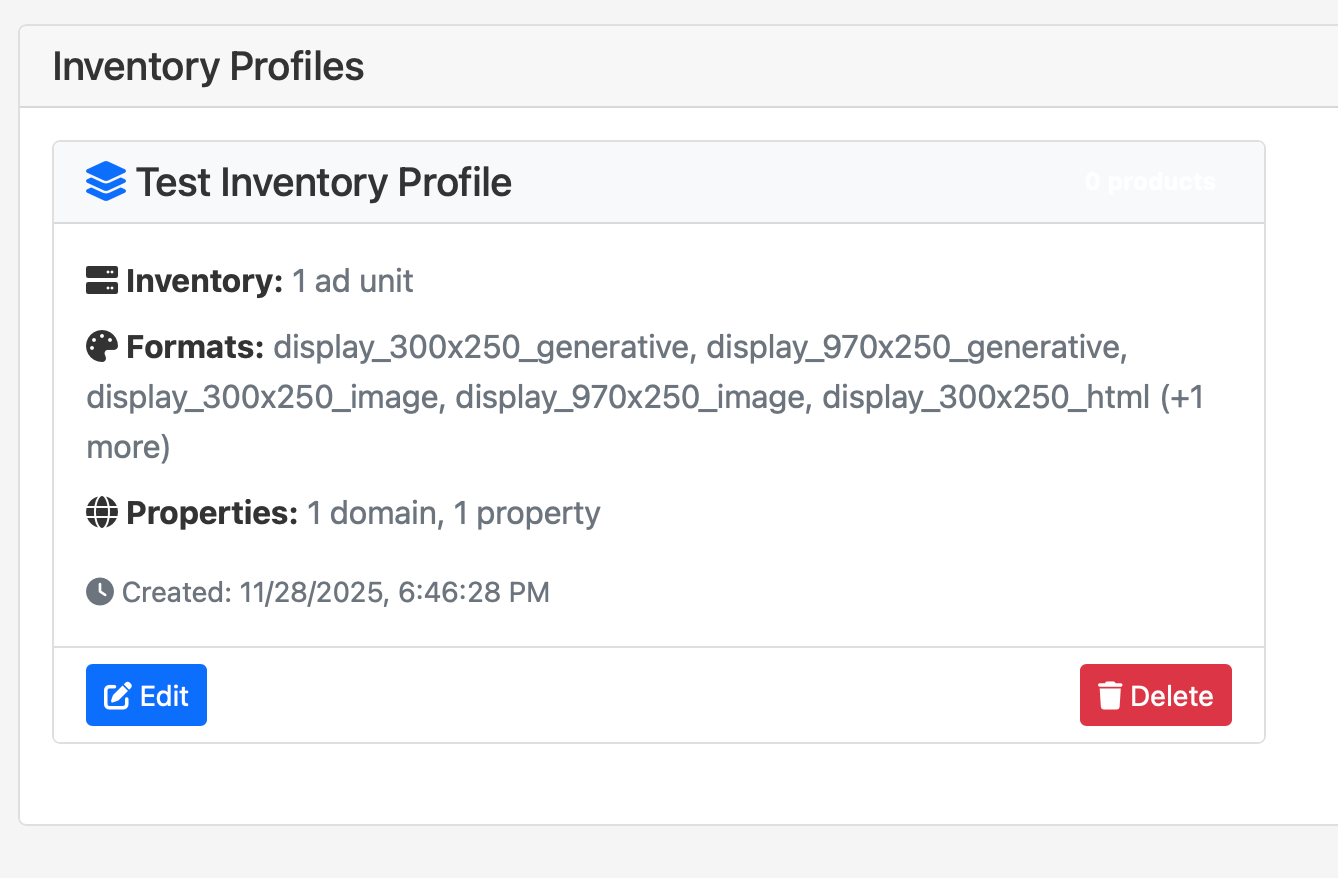
You need to configure your ad server and make sure that all of your ad units, placements, and targeting capabilities are available. There are some nice features like the ability to bundle inventory into profiles:
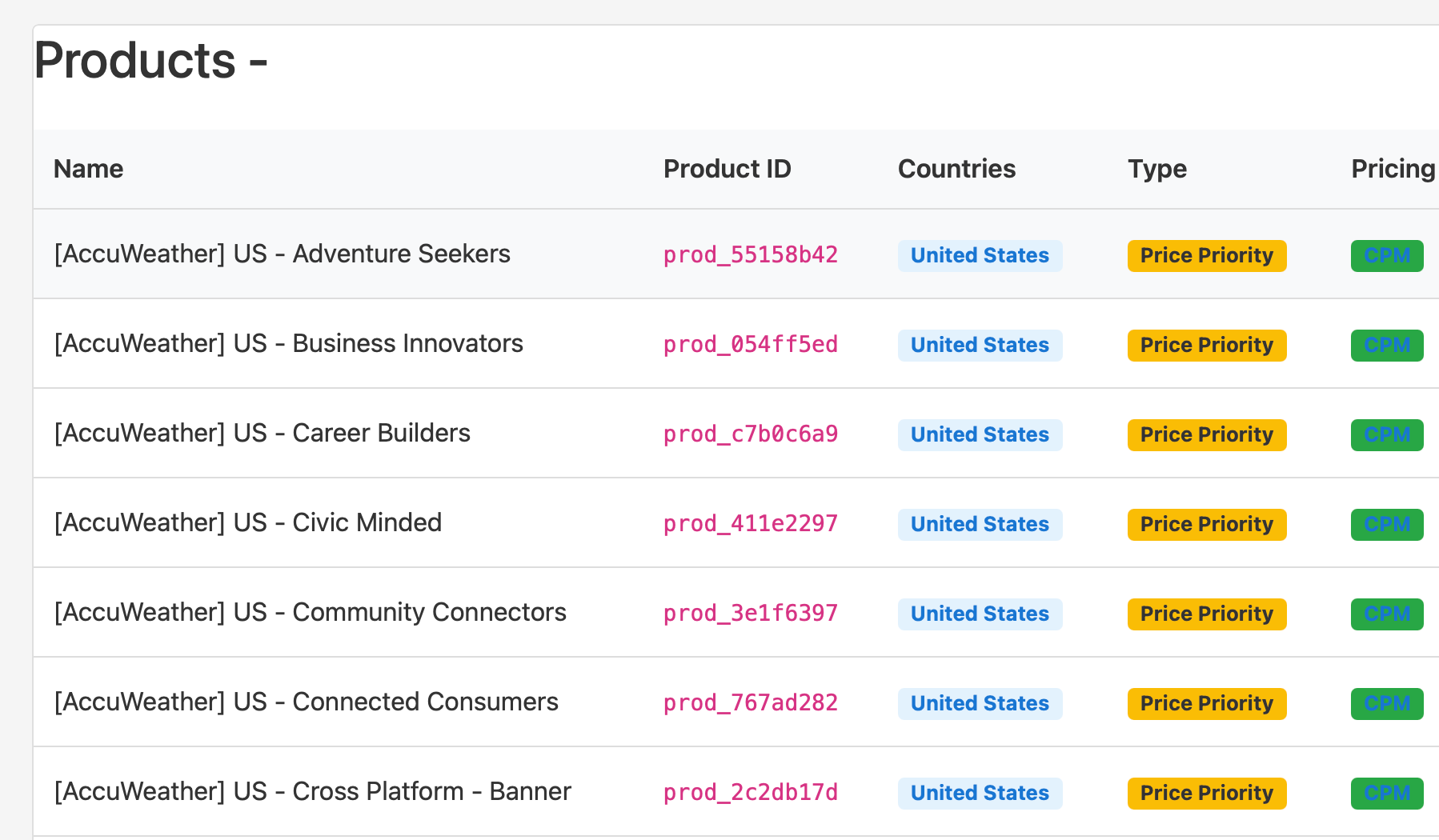
You set up the products you want to sell (either manually or by connecting to an order management or other internal system):
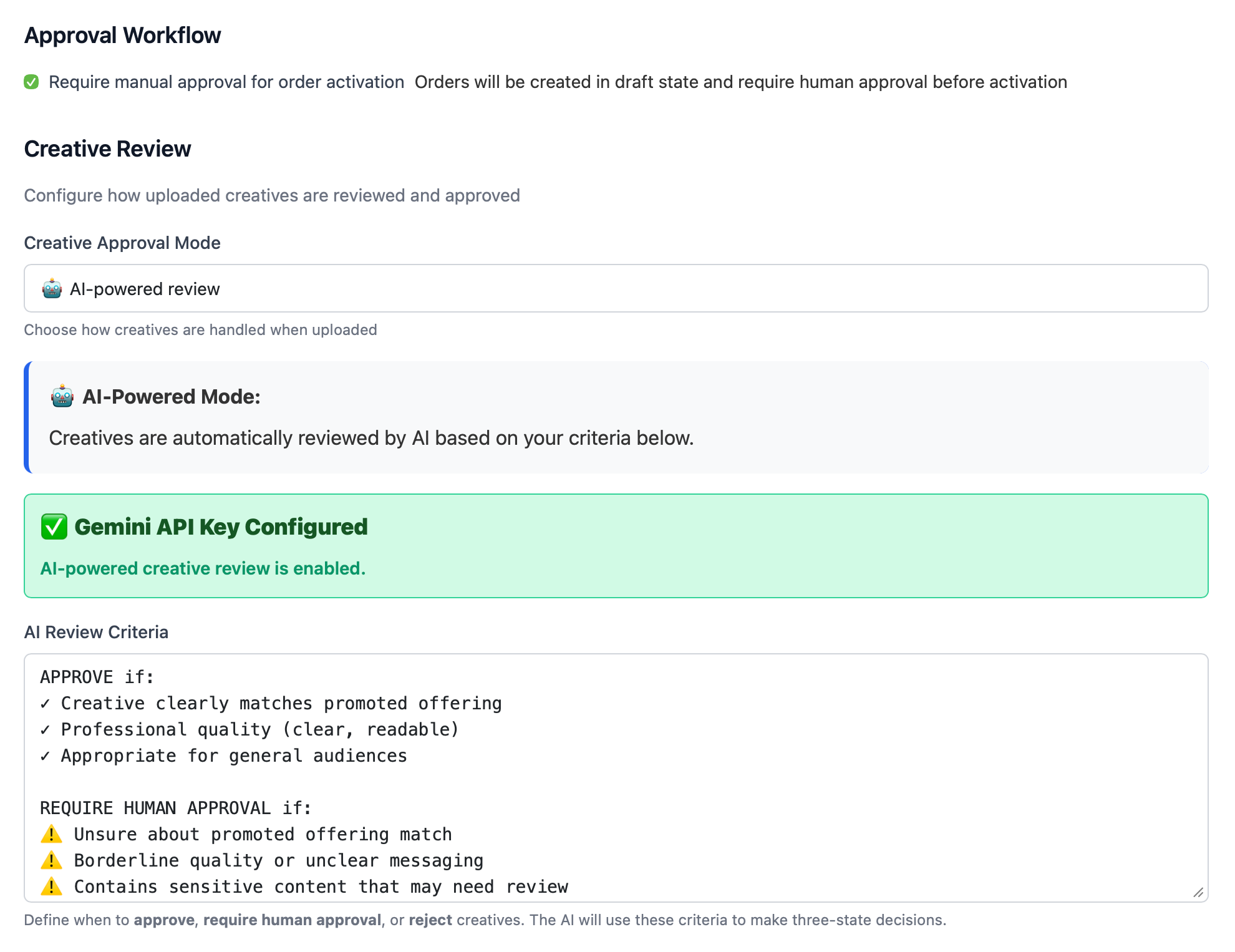
Then you configure a bunch of policy and workflow settings that ensure that a human or a trusted AI agent can review every action taken:
You can integrate other agents to provide creative generation and 1P data integration:
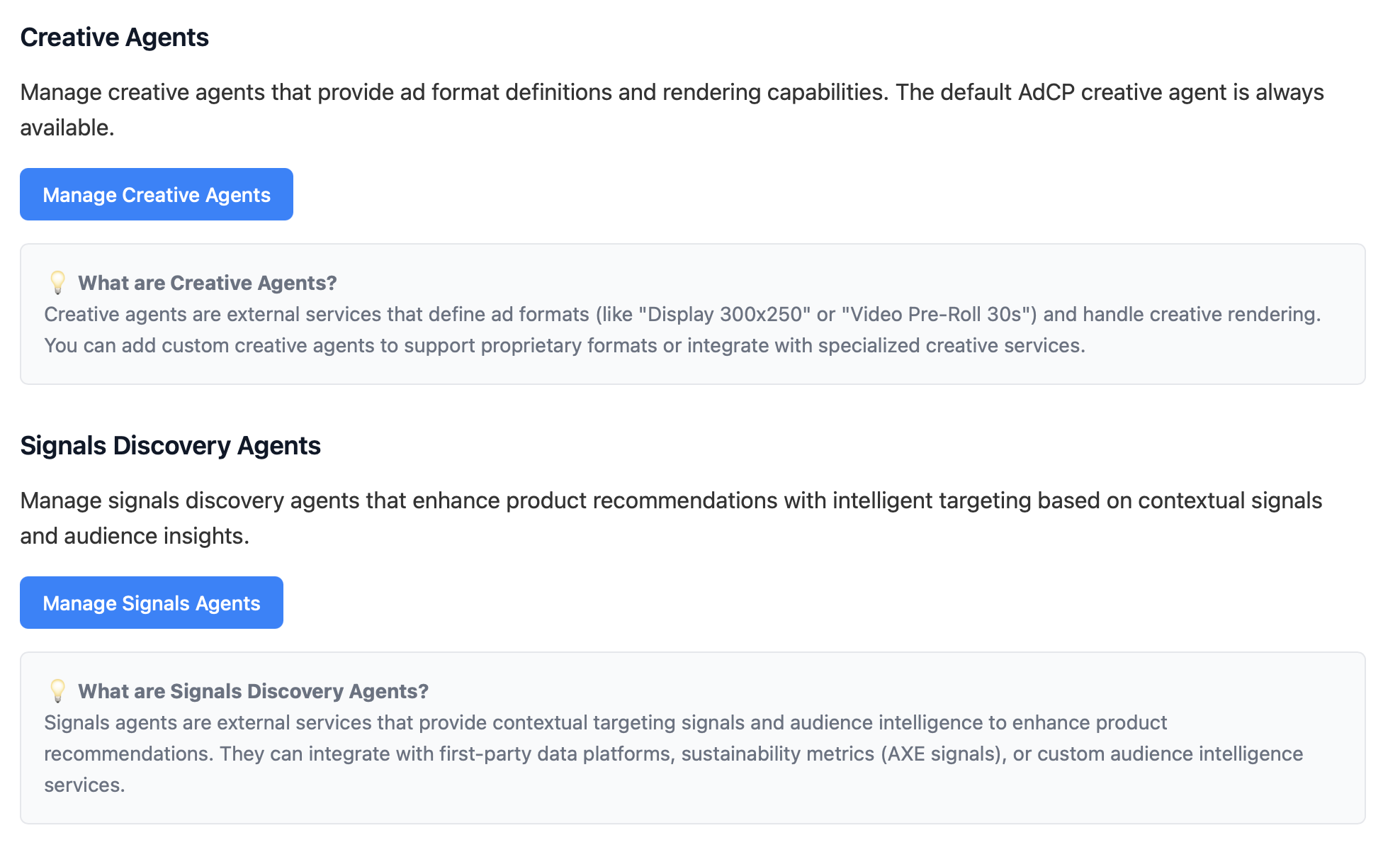
There’s more to show, but this gives you an idea of what it looks like to provide the tools and guardrails for a premium publisher to - carefully - open up ad inventory for agents to discover, buy, and manage.
The Lifeblood of the Internet
Imagine an internet where ad tech makes publisher revenues go up, not down. We could put journalists back in newsrooms, revitalize web communities, and empower a new generation of creators to thrive outside of walled gardens.
That’s worth an afternoon to deploy.